Birdy Flight: The Story Of Traverse City's Newest Low-Alcohol Wine
By Craig Manning | June 20, 2026
“Low and slow”: That’s how Callie Gruman Furste describes Birdy, the new low-alcohol canned wine spritzer she’s launching into the northern Michigan market this summer. The wine, a collaboration with Old Mission’s Bonobo Winery, has been in the works ever since the pandemic, when Furste – who resides in Chicago but has family ties in Traverse City – found herself longing for more time in northern Michigan.
“I was thinking, ‘How do I make myself an excuse to get up there more and more?’” Furste laughs. In a typical summer, Furste, her husband, and their kids spend July and August in Frankfort. They also make routine visits to Traverse City to visit Furste’s parents – her dad is Lowell “Jep” Gruman, managing director of Boomerang Catapult and a founding member of the Traverse City Curling Club.
In the early 2020s, Furste had also just given birth to her second child, and “was unable to finish a whole bottle of wine before it went bad, because I was nursing my son.”
“I wanted a drink, and so I was mixing my white wine with ice and putting club soda in it,” she says. “It's not a novel idea; a lot of people make spritzers all the time. But surprisingly, I couldn’t find this very simple idea at the store. Ready-to-drink cocktails (RTDs) were dominating the industry at the time, but the low-alcohol wine spritzer was one of the few versions of the trend no one was putting on store shelves.”
The idea for Birdy was born. Furste got her brother Tad on board as a business partner, then called in a favor from Jep to get an introduction to the Bonobo team. By 2023, the group was taste-testing base wines and talking strategies to remove some – but not all – of the alcohol.
Non-alcoholic (NA) wines have gained ground in recent years. Nielsen reported in January that NA wine sales were up 29.1 percent compared to 2025. Speaking to Ticker sister publication the Traverse City Business News in April, Chateau Chantal CEO Marie-Chantal Dalese called NA “the only wine section to have growth nationally”; Chateau Chantal recently launched its own stable of NA wines.
Despite the growth, Furste says there wasn’t much of a roadmap in the early 2020s for how to make a wine that left most of the alcohol on the cutting room floor.
“Our first run of Birdy was very, very small, just to understand what it took to make the type of product we wanted to make,” Furste tells The Ticker. “We worked with a partner out in Minnesota, to dealcoholize the wine. I don’t know if this has changed, but at the time, there wasn’t a dealcoholizing facility in Michigan.”
Birdy got a refinement – and a second batch – last summer, soft-launching locally with a small number of retail partnerships. Now Furste says the canned spritzer is ready for its close-up. To start, Birdy will be available exclusively in northern Michigan.
“We're going all in on Traverse City this summer,” Furste says. “And as a side benefit, I get the excuse to be up there for the next three months.”
Those months will be spent “pounding the pavement” and getting Birdy in front of as many businesses and customers as possible. “We have a partnership with the Garden Theater in Frankfort, and we’re already on the shelves at a handful of Traverse City retailers,” Furste says. “But a lot of what we'll be doing this summer is trying to expand that reach. We’re talking to all the big resorts and hotels. I even reached out to a few Airbnb hosts, to see if they would be willing to put this in their welcome basket.”
Also on the schedule: a variety of in-stores and tastings, including one today (Saturday) from 1-3pm at Oryana West.
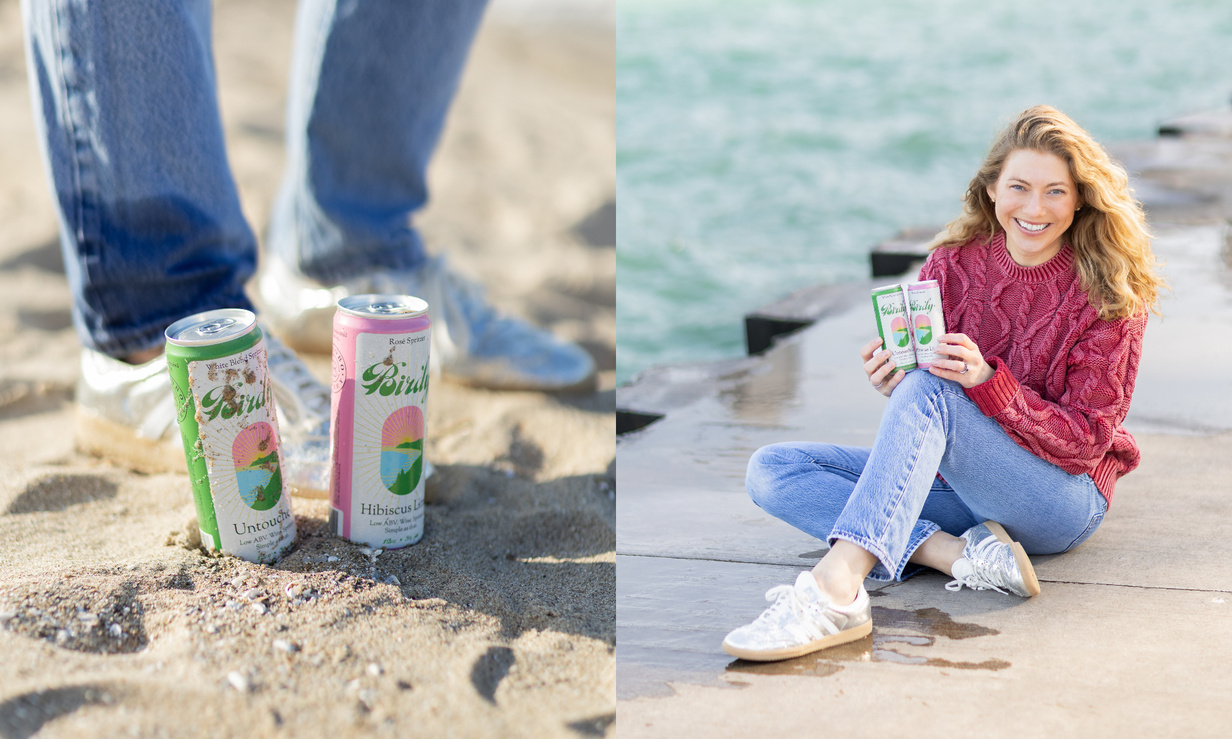
Furste, whose background is in management consulting and marketing, says the goal this summer is “selling the lifestyle” of Birdy. The wine is available in two varieties – a white wine spritzer dubbed the “Birdy Blanc” and a hibiscus lime-flavored rosé. Both are three percent alcohol by volume and less than 100 calories.
“We’re trying to show people that there's a different way to drink,” Furste concludes. “You don't have to be all in or all out. I think we've all seen the headlines: Gen-Z isn't drinking. Millennials are drinking less. But I also see, now that I'm in the industry and meeting other founders in the space, a lot of people are betting on the fact that, even during Prohibition, people kept drinking. Americans will always drink; it's a matter of how much they're willing to drink and how much they want to drink, and I think the question around balance is an important one.”
Comment

Birdy Flight: The Story Of Traverse City's Newest Low-Alcohol Wine
Read More >>DDA Could Send New TIF Plan to November Ballot
Read More >>County Commissioners Agree to Meet with Twin Lakes Plaintiffs
Read More >>Housing North Names New Executive Director
Read More >>


Dojo Sushi & Bonobo Winery Target July Opening for New Venture; More Restaurant, Retail News
Read More >>Sheriff's Office Issues Statement on Guilty Verdict in Cold Case Murder
Read More >>GT County Trail Millage Proposed
Read More >>Abra Berens & Erik Hall to Launch Teaching Kitchen in TC
Read More >>Proposed 80-Home Garfield Development Runs Into Road, Tree-Clearing Concerns
Read More >>State Approval Sought for Kelley Park Boat Launch
Read More >>