
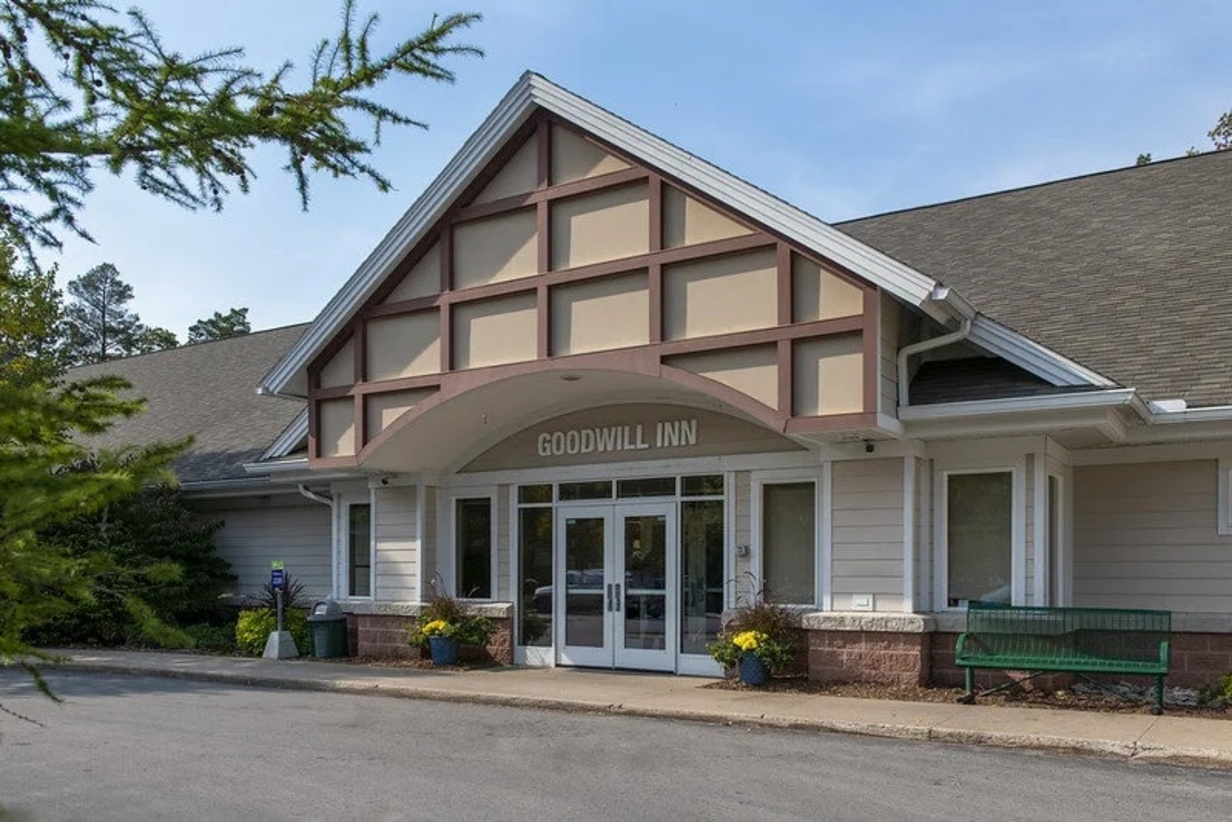
As Local Leaders Eye Housing Solutions, Garfield Township Resists Goodwill Inn Expansion
By Beth Milligan | Nov. 2, 2026
A committee of local leaders is working to put a new Housing and Homelessness Task Force plan into action. The new Oversight and Alignment team aims to develop an implementation plan by the year’s end. However, Garfield Township leaders are opposed to one key recommendation – creating a consolidated shelter campus, potentially at the Goodwill Inn property on Keystone Road – saying the township shoulders an “unfair” share of the region’s low-income and shelter housing.
Director Emma Moyer of the Northwest Michigan Coalition to End Homelessness – which spearheaded the the Housing and Homelessness Task Force – says several community leaders who previously served on the task force are on the new implementation team. Traverse City Mayor Amy Shamroe and Mayor Pro Tem Laura Ness have joined the group, as have Grand Traverse County Commissioners Ashlea Walter and Brian McCallister. The team is eyeing a fast-paced schedule of up to six meetings by year’s end, with the first meeting slated for today (Monday).
“We’ve talked about having an outline of an implementation plan available by the end of the year and something to present on the direction we’re moving in,” says Moyer. “We know (the actual implementation) is going to take a lot longer.”
The Housing and Homelessness Task Force met for over a year to create a housing plan tailored to northern Michigan. The final report outlines eight key housing recommendations along with potential budgets, funding sources, and action steps. Both city and county commissioners passed resolutions of support for the plan, which includes recommendations like “strengthen coordinated system navigation and outreach to reduce inflow and returns to homelessness” and “invest in targeted prevention and housing stabilization to reduce first-time homelessness.” Zoning changes, development incentives, local financing tools, and efforts to expand deeply affordable or permanent supportive housing are also highlighted.
One key recommendation is creating a single campus for shelter operations with 165 beds – potentially through expanding Goodwill’s Keystone Road operations, exploring new locations, or adding 30 beds at Safe Harbor. That prompted Garfield Township Supervisor Joe McManus – who said township officials have repeatedly tried to tell city and county leaders they don’t want an expanded shelter in Garfield Township – to address the plan at a September 22 board meeting.
McManus said Garfield Township has the region’s “only 24/7, 365 shelter” at the Goodwill Inn, plus 15 or 16 payment-in-lieu-of-taxes (PILOT) developments geared toward lower-income tenants. In addition, “forty-three percent of the multifamily housing in the county is in Garfield Township…forty-two percent of the mobile homes in the county are in Garfield Township,” he said. “We really feel we’ve done our share, and we’ve successfully aided in keeping people housed and not homeless.”
McManus said the cost to “Garfield taxpayers is tremendous already” and that “moving the entire region’s homeless into our boundaries would be unfair and really tax us.” He said the Goodwill Inn is on pace to have 700 911 calls this year, which he said reflected a burden on local services. He twice referred to the proposed consolidated shelter as a “concentration camp.” McManus didn’t return a request for comment, but Township Manager Chris Barsheff later told The Ticker McManus may have misspoke and meant to refer to the project as a “concentrated campus.”
Other township officials also criticized the expanded shelter concept. “There’s nothing that’s zoned for it,” said Trustee Molly Agostinelli. “Just because you’re the City of Traverse City, you’re not coming out here and telling us what (to do).” She noted such a campus could never move forward “without the approval of the planning commission,” implying the township would likely reject it.
Barsheff told The Ticker that while he understands the “efficiency” of having one shelter with all services and providers available on site, his past experience running the Grand Traverse County Jail makes him concerned about the “safety” aspect of having so many unhoused individuals in one location. Barsheff said he’s open to exploring the report’s recommendations so long as a consolidated shelter in Garfield Township isn’t treated as a foregone conclusion.
Trustees are set to have a meeting on the topic in November, where they’ll consider issuing a resolution stating the township’s position. “We’re dealing with (housing) at a level far above anybody else,” McManus said. “There are neighboring townships that don't have any PILOT projects in their township. Until we bring the whole region up to our level, I don't think that it's our responsibility to take on more.”
Moyer says the task force wants to “remain good partners” with Garfield Township, with township leaders to be included in implementation planning meetings. She emphasizes that no location has been determined yet for an expanded shelter or additional beds. “I think that’s part of what this group is going to decide,” she says. “We’re remaining focused on evidence-based practices and looping in the right people. Garfield needs to be at the table for all of this. I'm grateful they're willing to have these conversations with us.”
Executive Director/CEO Dan Buron of Goodwill Northern Michigan says “there are not enough shelter beds” overall in Grand Traverse County. “We have to add more units if we want to not have unsheltered people in our community,” he says. His organization is open to expanding the Keystone site if that’s the desired community approach, Buron says. He notes that if leaders could go back in time, “it’s unlikely we would have built two separate shelters. We would’ve built one that’s trauma-informed, efficient, and cost-effective for the community. It would be designed in a better way.”
Buron says an expanded shelter could be structured operationally to address public safety concerns. Such a location would mean less movement of unhoused individuals, he points out, as they would have a stable place to stay and not have to rotate to different sites throughout the day. According to Buron, 70-80 percent of unhoused individuals resolve their situation within a year. Those individuals are “our neighbors” and often escape the “traumatizing” experience of homelessness with the right support, he says.
“People want to find a solution that's humane and balances the needs of individuals experiencing homelessness with the safety concerns of the community,” Buron says. “These are tricky and challenging problems, but I'm confident we can work together as a region to find a solution that makes sense for everyone.”
Photo credit: Gary Howe
Comment

As Local Leaders Eye Housing Solutions, Garfield Township Resists Goodwill Inn Expansion
Read More >>Reaching the Boiling Point
Read More >>Traverse City Central Preps for First-Ever On-Campus Greenhouse
Read More >>'I Want Them To Feel Good About Themselves:' TC West's Tom Brown Reflects On Decades Of Coaching
Read More >>



Changes Approved For TVC Terminal
Read More >>Garfield Trustees Talk Phishing Scheme, Upcoming South Airport Work, Liquor License
Read More >>Seattle On TVC Radar
Read More >>Airport Police Investigation Leads to Arrest, Recovery of Stolen Property
Read More >>TC Woman Arrested After Crashing Into Multiple Vehicles, Fleeing Deputies
Read More >>Road Commission Eyes Ambitious Plan for Boardman Crossings
Read More >>